
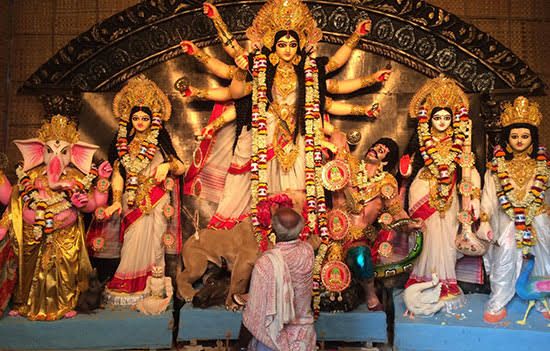
Durga Puja is one of the most important and widely celebrated Hindu festivals, particularly in the Indian states of West Bengal, Assam, Odisha, Tripura, and Bihar, as well as in Bangladesh
Durga Puja celebrates the victory of Goddess Durga over the buffalo demon Mahishasura, symbolizing the triumph of good over evil. According to Hindu mythology, Durga was created by the gods to slay Mahishasura, who could not be defeated by any man or god.
The festival typically lasts ten days, but the most significant days are the last five: Shashthi, Saptami, Ashtami, Navami, and Dashami. On Dashami, the idols of Durga are immersed in water, marking the end of the festivities.
Durga Puja is more than just a religious eventâ€â€it's a massive cultural festival. It includes artistic displays, music, dance, and food fairs. In Bengal, beautifully crafted pandals (temporary structures) are set up, often with intricate themes. These pandals house idols of the goddess, and people go "pandal hopping" to see the creativity and grandeur.
Special feasts, called bhog, are prepared and offered to the goddess, later shared with devotees. Popular dishes include khichuri (rice and lentils), various sweets like rosogolla, and special delicacies like pithe, payesh, and more.
On the last day, married women engage in Sindoor Khela, where they smear each other with vermilion powder, symbolizing the joy of married life and wishing for long-lasting marital bliss.
Although the festival is rooted in Bengal's culture, it is celebrated by Bengali communities worldwide, including in the US, UK, Canada, and Australia.
Durga Puja is a vibrant, communal event that blends religious devotion with cultural and artistic expression, making it one of India's most colorful and spirited festivals.